Marlow Ford - Do I Need the Diesel for Towing with a 2026 Ford Super Duty F-250 around Shenandoah, VA?
Choosing between the gas and diesel powertrains for a 2026 Ford Super Duty® F-250® often comes down to the kind of towing you do most—and how often you do it. Around Shenandoah, VA, you’ll find a mix of valley highways, grade changes, and two-lane routes leading to farms, job sites, and trailheads. That variety makes it smart to think through payload, trailer type, and terrain before picking your engine.
Let’s walk through a practical framework for deciding whether to go diesel or stick with gas, using the core strengths of each engine option and the way Ford’s trailering technology supports you in the real world.
Understanding the Super Duty® Towing Landscape
Within the Super Duty® family, diesel-powered models headline the towing charts, with the lineup offering a maximum available gooseneck tow rating of up to 40,000 pounds. While the Super Duty® F-250®’s specific ratings depend on configuration, the big picture is clear: Ford engineered this truck for serious towing and built-in intelligence that makes connecting, reversing, and load management more predictable. Available Pro Trailer Backup Assist™, Pro Trailer Hitch Assist™, and Onboard Scales with Smart Hitch remove friction from the parts of towing that traditionally slow you down.
That means your engine choice isn’t just about a number on paper—it’s also about how the truck helps you consistently set up your trailer correctly and keep composed on the road. On hills, grades, and tight approaches around the Shenandoah Valley, that composure matters.
Who Should Choose the Diesel?
If your towing involves frequent 5th-wheel or gooseneck loads, long highway pulls, or heavy construction equipment, the available 6.7L High Output Power Stroke® V8 Turbo Diesel is worth serious consideration. The diesel’s abundant low-rpm torque helps the truck pull away from stops smoothly, climb grades with less shifting, and settle into a relaxed rhythm at highway speeds. When paired with the TorqShift® 10-speed automatic, it feels confident and unflustered under sustained load.
Diesel can also make sense for drivers who cover higher annual mileage with a trailer—such as mobile contractors or those who travel with toy haulers or large campers. The goal isn’t simply raw power; it’s predictable, repeatable control with heavy loads.
Who Should Choose the Gas V8?
For many owners, the available 7.3L 2V DEVCT NA PFI V8 gas engine is the sweet spot. It’s a strong, straightforward workhorse that shines in mixed-use cycles—think regular payload, conventional trailers, and a blend of commuting and towing. If your towing is intermittent, within moderate weight ranges, or primarily local, the 7.3L’s responsiveness pairs well with the TorqShift® 10-speed to deliver confident acceleration and well-managed downshifts on grades.
Fleets, small businesses, and owners who prefer simpler fill-ups appreciate the gas option’s practicality. With smart trailering tech and the Super Duty® F-250®’s robust chassis, the gas V8 handles the core tasks many truck owners tackle week in and week out.
Match the Engine to Your Typical Tow
Before you decide, define your “most common tow” as precisely as possible—trailer type, average and maximum weight, tongue weight, and how often you pull it. Then factor in your routes. Around Shenandoah, VA, routes often include elevation changes—grades that reward torque and strong cooling. The TorqShift® 10-speed helps both gas and diesel options by keeping you in the right gear and assisting with engine braking, but the diesel’s deeper torque reserve can pay off if you’re routinely near the upper end of your trailer’s rating.
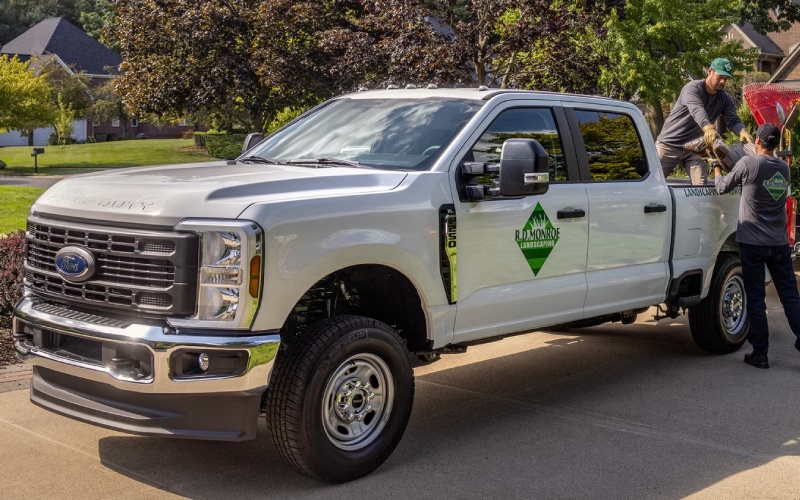
If you’re in the middle—say, a landscape trailer, equipment hauler, or a mid-size camper—the gas V8’s balance of power and simplicity may be precisely what you need. When you’re pushing heavier 5th-wheel or gooseneck duty consistently, the diesel earns its keep by keeping you in the “calm zone” more of the time.
Trailering Tech That Makes Any Engine Smarter
Ford’s available trailering suite narrows the gap between engine choices by helping you set up correctly every time. Pro Trailer Hitch Assist™ helps align the ball and coupler, Pro Trailer Backup Assist™ simplifies reversing, and Onboard Scales with Smart Hitch offer helpful estimates for payload and trailer tongue weight. Add the 360-Degree Camera for extra visibility in crowded lots and tight job sites. Put simply, both engines are better when you use these tools consistently.
Practical Steps to Decide
Use this quick decision framework to choose with confidence:
- Frequency: Tow heavy 5th-wheel/gooseneck weekly or more? Lean diesel. Tow moderate loads occasionally? Consider gas.
- Terrain: Regular steep grades or long highway pulls? Diesel’s torque advantage shines.
- Trailer Type: Heavy equipment or large RVs often favor diesel; light-to-mid conventional trailers suit the gas V8.
- Duty Cycle: High annual miles with a trailer? Diesel merits a close look; mixed-use cycles often fit gas well.
- Upfits and Tech: Use Smart Hitch, Pro Trailer Backup Assist™, and a weight-distribution hitch to maximize stability either way.
No matter what you choose, remember that correct setup—proper hitching, balanced cargo, verified weights, and tire pressures—does as much for stability and safety as engine selection.
Frequently Asked Questions:
Does the diesel automatically tow more than the gas V8?
Across the Super Duty® lineup, diesel models headline the towing charts. For the Super Duty® F-250®, specific ratings vary by configuration, axle ratio, and hitch type. The best approach is to identify your preferred cab, bed, axle, and package—and then confirm the published rating for that build.
Is the gas 7.3L V8 strong enough for a mid-size camper?
Yes, many mid-size campers and equipment trailers pair well with the available 7.3L V8, especially when you use weight-distribution, correct tongue weight, and Ford’s available trailering tech. Your trailer’s actual weight and cargo will determine the best fit.
Which trailering features are worth adding?
Pro Trailer Backup Assist™, Pro Trailer Hitch Assist™, the 360-Degree Camera, and Onboard Scales with Smart Hitch are high-value additions for most owners. They save time during hookup, improve confidence in tight spaces, and help verify load balance.
When you’re ready to compare builds, Marlow Ford can walk you through engine choices, hitches, axle ratios, and the tech that suits your most common tow. We’re serving Stanley, Shenandoah, and Elkton with guidance that’s grounded in local routes, real job sites, and the trails you actually drive. Bring your trailer details, and we’ll map a configuration that delivers the control, capability, and peace of mind you expect from a Super Duty®.
Request more 2026 Ford Super Duty F-250 information
Categories:
Ford Super Duty F-250