
Marlow Ford - Which SUV handles Shenandoah backroads better for everyday life around Front Royal, VA — 2026 Ford Bronco Sport® or 2026 Subaru Forester?
The short answer
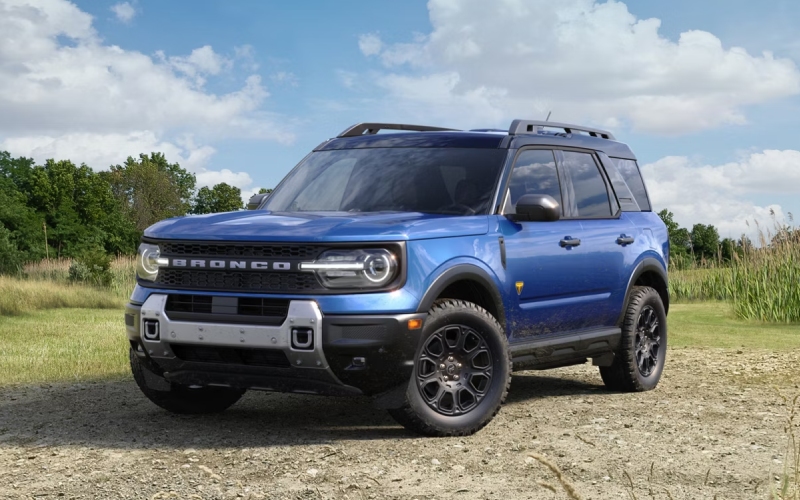
Both compact SUVs are capable, but if your question centers on traction and control when pavement turns to gravel or two-track, the 2026 Ford Bronco Sport® holds the advantage. It brings standard 4x4 across every trim, G.O.A.T. Modes® to fine-tune traction, and an available twin-clutch rear drive unit on Badlands® that can send torque to the wheel with grip. The 2026 Subaru Forester counters with standard Symmetrical All-Wheel Drive and available X-MODE® (dual-function on some trims), which is excellent for slick pavement and light trail work. For drivers who regularly head toward trailheads, river access points, or cabins outside town, the Ford’s hardware builds more margin into off-pavement driving without sacrificing everyday refinement.
Here in the Valley, unpaved roads can vary from hardpack to washboard to rutted after a storm. Systems that quickly re-route power across an axle or add useful drive modes make a visible difference in how precise your inputs feel and how confidently you can carry momentum over uneven surfaces. That’s where Bronco Sport’s design focus shows through.
How each traction system works
Bronco Sport® equips standard 4x4 and G.O.A.T. Modes® so you can toggle vehicle settings for conditions like sand or slippery surfaces. On Badlands®, Advanced 4x4 adds a twin-clutch rear drive unit capable of actively vectoring torque from side to side—essentially helping the outside rear wheel push you around a loose corner or transferring power away from a spinning wheel in a cross-axle situation. This is traction you can feel when you roll from gravel shoulders to a steeper, rock-strewn grade.
Forester’s hallmark is Symmetrical All-Wheel Drive, thoughtfully tuned for balanced handling and consistent traction. X-MODE® enhances low-speed control by optimizing throttle, transmission mapping, and stability control. Dual-function X-MODE adds presets for snow/dirt or deep snow/mud. It’s intuitive and confidence-inspiring on mixed-surface commutes and well-graded trails, and Wilderness trim elevates that capability further with added ground clearance and all-terrain tires.
Off-road hardware that matters in the Valley
Hardware is what separates “can do” from “will do” when routes get rough. Bronco Sport® Badlands® brings HOSS Off-Road Suspension, steel-plated front bumper elements, underbody protection, and all-terrain tire fitments to better handle ledges and embedded rocks. Approach and departure-friendly proportions also help limit scrapes on dips and breakovers. While Forester Wilderness makes smart, trail-boosting upgrades—including more ground clearance and rugged tires—its AWD system doesn’t offer the same lateral torque-vectoring capability you get from the twin-clutch rear drive unit on the Ford. If you regularly peel off toward fishing spots or fire roads, that difference shows up in fewer wheel spins and smoother progress.
Beyond the trail bits, both SUVs offer trail-friendly visibility with upright seating positions and good outward sightlines. But the Bronco Sport’s available accessory switches and adventure-first interior details make it easy to add lights, air compressors, or rooftop gear and keep everything tidy for daily driving.
Everyday drivability and cabin tech
Day to day, both are easygoing. Forester’s ride is supple, its cabin spacious, and the available 11.6-inch display is crisp. Bronco Sport® counters with a sizable 13.2-inch center display with wireless Apple CarPlay® and Android Auto™, plus the Ford Connectivity package that includes a Wi-Fi® hotspot for one year. Outer Banks® adds premium-trimmed heated seats and a heated steering wheel, while Heritage dresses the cabin with Navy Pier plaid accents. These touches make the Ford feel both modern and characterful, which is a rare combo in this segment.
On the road, the Ford’s available 2.0L EcoBoost® provides confident passing and merging, while the 1.5L EcoBoost® is efficient and responsive for everyday errands. Forester’s 2.5-liter SUBARU BOXER® engine pairs smoothly with its Lineartronic® CVT for calm, predictable acceleration. Both deliver the kind of refinement you want on I-81 and the scenic byways that stitch together small towns and trailheads.
When you zoom out, the question becomes less “can it handle a dirt road?” and more “which one stays composed when the dirt road isn’t perfect?” That’s where the Ford’s standard 4x4, broader drive-mode tuning, and available torque-vectoring rear unit create a wider envelope for the varied surfaces we see across backroads and farm lanes.
Key takeaways for your decision
Use this quick comparison as you plan test drives and think through where you’ll go most often.
- Traction systems: Bronco Sport® runs standard 4x4 with G.O.A.T. Modes®; Badlands® adds a twin-clutch rear drive unit. Forester features Symmetrical AWD with available X-MODE® and dual-function X-MODE on select trims.
- Trail hardware: Bronco Sport® Badlands® brings HOSS Off-Road Suspension, steel-plated protection, and rugged tire options; Forester Wilderness adds clearance and all-terrain tires but no torque-vectoring rear axle.
- Cabin tech: Bronco Sport® offers a 13.2-inch display with wireless Apple CarPlay®/Android Auto™ and a hotspot included for one year; Forester’s available 11.6-inch system is polished and user-friendly.
- Power options: Bronco Sport® gives you a choice of turbocharged EcoBoost® engines; Forester uses a single 2.5-liter SUBARU BOXER® across trims.
If you want the widest margin for uneven gravel and steeper grades without giving up daily comfort, the Ford earns the nod; if your travel is mostly paved or lightly graded, Subaru remains a dependable companion.
Frequently Asked Questions:
Does the Bronco Sport®’s twin-clutch rear drive unit make a real difference off pavement?
Yes. By actively vectoring torque side to side, it helps the outside rear wheel push you through loose corners and reduces wheelspin when one rear wheel lifts or slips. It’s especially helpful on rutted or off-camber sections where traditional AWD can struggle to maintain momentum.
How do G.O.A.T. Modes® compare to Subaru’s X-MODE® settings?
Both adjust throttle, stability control, and transmission behavior for low-traction surfaces. G.O.A.T. Modes® offer a broader range of presets across the Bronco Sport® lineup, while Subaru’s dual-function X-MODE focuses on snow/dirt and deep snow/mud. The Ford’s variety and integration with a torque-vectoring rear axle give it more adaptability as conditions vary.
Which is better for everyday commuting with occasional trail use?
Either will do the job. If your “occasional trail” includes steeper climbs, off-camber washouts, or rocky sections, the Ford’s hardware advantage pays off. If your unpaved time is limited to well-maintained gravel and your priority is a calm, spacious commuter, Subaru makes a strong case.
When you’re ready to compare back-to-back, plan a route that includes a mix of stop-and-go, a highway merge, and a well-graded gravel stretch. The differences become clear in how each vehicle meters traction and maintains composure. For further guidance, Marlow Ford is happy to help you map a test loop that mirrors your real-world driving while serving Front Royal, Woodstock, and Harrisonburg.
Request more 2026 Ford Bronco Sport information
Categories:
Ford Bronco Sport